







MOMENTUM
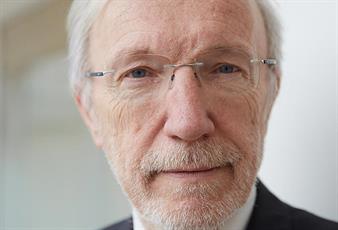
When research guru Mark Penn was named global chief executive of Burson-Marsteller in December of 2005, the firm was reeling: Penn was the third CEO in a year. And the early signs did not encourage confidence that Penn was going to enhance stability: a slew of high-profile departures and controversy over his involvement in the Clinton campaign. At that time, few would have predicted that BM was on track to be our North American Agency of the Year in five years, but after consistently strong growth (fee income was up by double digits in the US last year) and record profits, that recognition was well-deserved. New business in 2010 included international assignments from Bayer, Bosch, Ford, Heineken, Merck, Roche and Sony, and in the US from Bridgepoint, Discover Financial Services, Hawaiian Airlines, Livestrong, and Shire. That momentum has continued into 2011, with wins including Coca-Cola and Microsoft.
REGIONAL REACH
One of the critical signs of continuity after Penn’s arrival was the elevation of longtime BM exec Pat Ford to US chief executive. It was a smart decision and has been rewarded by steadily improving performance in the US, which has led Burson’s global recovery and established itself once again as one of the toughest competitors in the business. Last year saw strong contributions from major offices in New York, Washington, DC, and San Francisco, and from the firm’s Texas operations (Dallas, Austin and Houston), which have been growing at a healthy rate over the past five years. Those offices are part of a 13-city network that provides solid coverage of the country. The firm serves the Canadian market through its longtime relationship with market leader National.
INTERNATIONAL REACH
There’s a case to be made that Burson has the most complete coverage of key EMEA markets: the Brussels office is the one almost all others in the European capital identify as the one to beat; the German operation represents some of the largest local multinationals as well as overseas giants; and the 120-person UK office is the turnaround success of the past few years and now serves as the hub for 25 percent of the firm’s top 20 clients. The firm is also among the largest multinationals in other major EMEA markets. Burson-Marsteller expanded its Asia-Pacific footprint in 2010 with the addition of a new wholly-owned office in Kuala Lumpur. The firm’s largest Asia-Pacific operations remain in the two fast-growing BRIC economies: India and China. In the former, Genesis Burson-Marsteller has established B-M as a market leader in both size and sophistication; in the latter, the firm has offices in four mainland offices as well as a strong Hong Kong operation. BM also has solid operations in Korea, Japan, Singapore, Indonesia and Australia.
EXPERTISE
Burson’s greatest strength remains its corporate and public affairs practices. The former, under the leadership of Jason Schechter, has depth of expertise in crisis and change communications, while the latter has an impressive breadth of capabilities and a client list that ranges from Livestrong to the Veterans’ Administration to the Government of Alberta. The technology practice is another source of strength, providing corporate and tech expertise to clients such as HP, Intel and SAP. The healthcare practice appears to be poised for a strong recovery after a few difficult years, with new leadership and 24 percent growth in 2010, and the brand marketing offer is a potential growth area in 2011. Perceived as a digital laggard just a few years ago, Burson has developed a particularly formidable capability in online crisis and issues management. The firm has also worked to integrate its various other units—the Penn Schoen Berland research business, grassroots specialist Direct Impact, creative and content development shop Proof, and lobbying operation Prime—to deliver a broad range of services beyond the traditional PR offer.
TALENT
Together, Penn and Ford have strengthened the firm’s senior counseling ranks with big names such as former deputy secretary of state for public diplomacy Karen Hughes and former White House press secretary Dana Perino, joining Penn and vice chairman Dan Baer as members of the firm’s new global strategy group. Key additions over the past year or so include Helene Ellison (formerly CEO of Healthstar) as chair of the healthcare practice; Cheryl Heinonen (former head of corporate relations at Visa) to MD of the San Francisco corporate practice; Erica Swerdlow (ex-Porter Novelli) as market leader for the Midwest; CNBC veteran Jim Goldman as chair of the US technology practice; Dallas Lawrence (from Levick) as managing director of digital public affairs; and Dan Orsborn in a new role as managing director of client and business development.
CULTURE
Long regarded as a leader in professional development, Burson has been emphasizing two areas in particular in recent years: first, making sure that account staff in every region are well-versed in the new evidence-based methodology; and second, ensuring that digital and social media expertise is available in every office and practice. The result is that the firm is beginning to show up (after a prolonged absence) on our list of agencies where employees of other firms would most like to work. It’s also worth highlighting the firm’s renewed commitment to diversity and inclusion, with new mentoring and recruitment initiatives in place.
INTELLECTUAL LEADERSHIP
It has been a little more than a year since BM introduced a new methodology (and brand platform) with the evidence-based communications approach, which draws heavily on Penn’s credibility in the research arena and has clearly resonated with clients. Today, BM and Penn Schoen are working closely on client assignments for Comcast, Ford, Intel, Microsoft, Sony, Telefonica and more, and the firm has introduced a suite of tools including message gap analysis, designed to identify opportunities for more effective message delivery, while promoting the approach with the release of its Fortune 100 Social Media Checkup research, examining the use of social channels by major corporations, and a new corporate responsibility study.
PROGRAMS
In recent months, BM has led high-profile campaigns for Ford (as part of a WPP-wide agency providing a broad range of corporate and consumer support), Intel (a brand positioning initiative based on thought leadership around innovation and education issues), and Foxconn (the Chinese supplier at the center of a crisis over a spate of suicides), underscoring the firm’s status as one of the few firms to call when communication becomes mission-critical. Other high-profile work includes the “sound of pertussis” patient education campaign for sanofi-Aventis, a SABRE-winning corporate and financial communications effort for Hawaiian Airlines, and the introduction of the new $100 bill—the agency’s latest large scale integrated effort on behalf of the US Treasury.
BRAND
The suggestion by a noted progressive commentator that “when evil needs a public relations firm, evil has Burson-Marsteller on speed dial,” probably wasn’t the kind of publicity the firm would have sought, but—hyperbole aside—it’s evidence that BM is once again among a handful of top firms sought after by clients (corporate and governmental) whose reputations are under serious threat. The reality is that Burson-Marsteller is now more widely respected among both clients and peers than at any point in the past two decades. And its various pro-bono initiatives—work with the Global Business Coalition on HIV/AIDS and the Interim Haiti Recovery Commission, among others—should help to dispel any cynicism about the firm’s values.
THE FUTURE
Clearly distinguished from its multinational peers by its evidence-based approach—only Edelman among the global leaders has a similarly well-defined strategic difference—with strong operations in all three regions, and a serious drive to succeed, Burson-Marsteller is once again regarded as a serious competitor by its peers, and seems set for continued growth, particularly if it can build a consumer capability to match its strength in corporate and public affairs.